
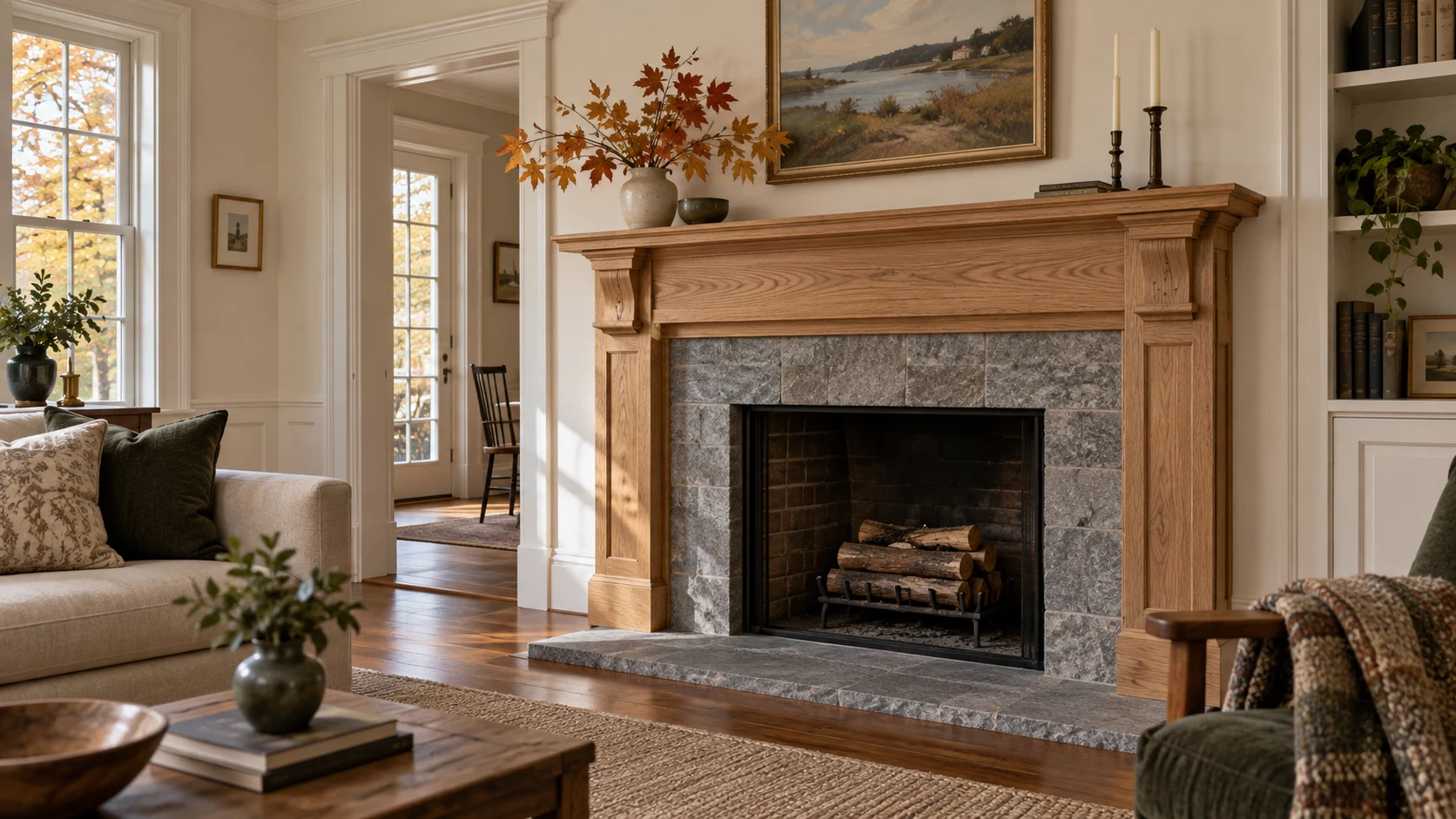
Why update your fireplace mantel or surround?
A fireplace is often one of the first architectural features people notice when they enter a living room. Even when the fireplace itself stays exactly where it is, the surrounding woodwork can change how the entire wall is perceived.
An existing mantel may look too narrow for the room. The trim may feel dated. Crown molding may stop awkwardly near the fireplace. A previously removed mantel may have left an unfinished-looking wall. Or the room may simply need more visual balance.
These are all situations where fireplace mantel woodwork can become part of a larger finishing carpentry project.
A custom approach can also make sense when the fireplace has an unusual width, an existing architectural feature that needs to remain, or proportions that do not work well with standard prefabricated products.
Instead of selecting a mantel because it is the closest available size, homeowners can consider the dimensions and character of the room first.
The surrounding details may include:
- A custom wood mantel shelf
- Decorative fireplace surround trim
- Crown molding above or around the living room
- Side trim or architectural molding
- Built-in cabinet elements where appropriate
- Additional finishing carpentry that connects the fireplace to the rest of the room
The important distinction is that custom carpentry can address the appearance and finish of the surrounding woodwork, while fireplace-specific technical questions must be handled according to the fireplace system, manufacturer instructions, applicable requirements, and the appropriate qualified professionals.
What to consider before starting the project
Before choosing a wood species or sketching out a mantel profile, take a close look at the existing hearth.
A successful project starts with understanding what is already there.
Look at the existing fireplace and surround
Start by identifying the type of fireplace or insert and documenting the existing construction around it.
Is it an older masonry fireplace? A factory-built fireplace? An insert? Another type of listed appliance?
The answer matters because the installation requirements may differ.
For example, Massachusetts building requirements address both masonry fireplaces and factory-built fireplaces, with listed factory-built systems required to be installed according to the conditions of their listing.
This is why a carpenter should not simply assume that the same design or clearance applies to every fireplace.
Decide what you actually want to change
Not every fireplace project requires a completely new mantel.
You may want to:
- Replace an outdated mantel
- Add decorative trim around an existing hearth
- Improve the proportions of the surrounding woodwork
- Continue existing molding profiles into the fireplace wall
- Coordinate the mantel with new cabinets or other interior carpentry
- Refresh the finish while retaining the basic design
Defining the scope early makes it easier to determine which parts are carpentry and which questions need to be addressed by a fireplace professional or local authority.
Step-by-step: planning custom fireplace woodwork
A thoughtful fireplace update does not have to be complicated, but it does benefit from a clear process.
1. Decide what you want the hearth to look like
Start with the overall goal.
Do you want a traditional mantel with detailed molding? A simple wood shelf? A cleaner modern surround? Or woodwork that blends into an existing room rather than becoming the main feature?
Think about the room as a whole instead of designing the mantel in isolation.
A fireplace that looks attractive in a photograph may not make sense in a room with low ceilings, narrow walls, traditional trim, or existing built-ins.
2. Assess the existing conditions
Measure the wall, fireplace opening, hearth, ceiling height, and surrounding trim.
Existing conditions can influence the design considerably. An older home may have uneven surfaces, existing molding profiles, previous repairs, or architectural details that need to be incorporated into the finished work.
This is one reason custom carpentry is different from simply attaching a standard shelf to a wall.
3. Choose the architectural style
Your mantel should make sense with the rest of the house.
For a traditional New England interior, homeowners may prefer more substantial molding profiles, classic proportions, or woodwork that complements existing architectural details.
For a more contemporary room, a simpler mantel with cleaner lines may be a better fit.
The objective is not necessarily to make the fireplace look new. In many homes, the better approach is to make it look like it belongs there.
4. Determine which woodwork belongs around the fireplace
The mantel itself may be only one part of the project.
Consider whether the wall would benefit from:
- Decorative molding
- Crown molding
- Additional trim
- Cabinet installation
- Coordinated finishing carpentry
These details can help connect the hearth to the rest of the living room.
For example, a mantel with a completely different trim profile from the surrounding room can look like an isolated addition. Matching or thoughtfully complementing existing molding can create a more cohesive result.
5. Check fireplace clearance requirements before finalizing the design
This is one of the most important steps.
Do not finalize the dimensions of a combustible wood mantel simply based on how it looks in a design photo or on a measurement used for another fireplace.
Clearance requirements can depend on the fireplace or insert, its listing, manufacturer instructions, existing construction, the materials being installed, and applicable Massachusetts and local requirements.
Massachusetts' current building code includes provisions addressing fireplaces and combustible materials, while factory-built fireplaces have their own listing and installation requirements.
Before combustible trim or a mantel is installed, homeowners should review the fireplace or insert manufacturer's installation instructions and determine which requirements apply to the specific installation. When technical fireplace work or an inspection is involved, consult the appropriate qualified fireplace professional and, when appropriate, the local building or fire authority.
6. Consider the character of the home
Especially in the Boston area, a fireplace may be part of a much older interior.
Before replacing everything, ask whether the existing character can be preserved.
An older mantel might have proportions worth keeping even if its finish needs updating. Existing trim may provide a useful reference for a new mantel profile. A traditional room may look better with new woodwork that respects the architecture instead of introducing an unrelated contemporary style.
7. Select the material and finish
The wood species and finish affect both appearance and cost.
Paint-grade wood can work well when the goal is to coordinate the mantel with painted trim. A stain-grade option may be appropriate when homeowners want the natural character of the wood to remain visible.
The finish should also work with the rest of the room.
Consider the existing doors, cabinets, stairs, molding, and other wood elements before selecting a color or sheen.
8. Plan the installation
Once the design and applicable fireplace requirements have been addressed, the carpentry portion can be planned around the existing space.
This is where accurate measurements, careful fitting, and organized scheduling matter.
The installation may involve removing existing decorative woodwork, preparing surfaces, fitting new pieces, making precise cuts, and completing the finish work.
9. Complete the surrounding carpentry and finishing
The visual difference often comes from the finishing details.
A mantel may be attractive by itself, but the surrounding trim needs to look intentional as well. Corners, transitions, joints, molding profiles, and connections to existing woodwork all affect the final appearance.
10. Finish and clean the space
A carpentry project should not leave the homeowner with a living room full of construction debris.
Clean workmanship includes the final details as well as the work area itself. Green Dot Carpentry emphasizes organized crews, uniforms, punctual scheduling, commitment to agreed working hours, and cleanup after the job.
Choosing a mantel style for your living room
There is no single "right" style for a custom wood fireplace mantel.
The best starting point is the architecture and proportions of the room.
Traditional mantel woodwork
Traditional designs can work particularly well in rooms with existing decorative molding, paneled doors, hardwood details, or other classic elements.
A traditional mantel may incorporate layered trim, stronger profiles, and more visual depth.
The key is proportion. Decorative molding should support the design rather than make a relatively small fireplace feel crowded.
Simple modern wood mantel
A modern wood fireplace mantel can be much more restrained.
A clean shelf, simple surround, or minimally detailed trim can create a contemporary appearance without requiring an elaborate construction.
This approach can also work in an older home when the homeowner wants to introduce a modern element while keeping the rest of the room relatively traditional.
Mixed traditional and modern details
Not every room needs to fit into one design category.
A homeowner might retain traditional crown molding and doors while adding a simpler mantel. Another option is to use a classic wood profile with a cleaner overall arrangement.
The goal is consistency, not necessarily a strict historical style.
Updating an older or character-rich home
The idea of historic fireplace surround restoration can mean different things depending on the condition and significance of the existing feature.
For many homeowners, the practical goal is not formal historic preservation. It is simply to update a room without making it feel disconnected from the house.
Massachusetts homes can have very different architectural influences, including Colonial, Victorian, Craftsman, and other traditional styles. Existing wood trim can provide valuable visual information about what belongs in the room.
Before removing an older surround, look at:
- The existing molding profiles
- The width and depth of the trim
- The proportions of the mantel
- Nearby doors and window casings
- Crown molding and baseboards
- Built-in details elsewhere in the room
- The overall scale of the fireplace wall
A thoughtful update might retain some of these elements while introducing cleaner lines or repairing sections that have become worn.
If a property has formal historic restrictions, preservation requirements, or a designated historic status, homeowners should also verify any applicable rules with the appropriate local authority before modifying architectural features.
Green Dot Carpentry does not present itself as a historic preservation specialist. Its role is residential carpentry and finishing work, with the design and installation approach tailored to the project.
Fireplace surround wood trim clearance in Massachusetts
When wood is being installed near a fireplace, appearance cannot be the only consideration.
The central question is not simply, "How close can the mantel be?"
It is, "What requirements apply to this specific fireplace and installation?"
Why there is no universal mantel clearance
Fireplaces and inserts are not all constructed or listed in the same way. Requirements can vary according to the fireplace type, manufacturer specifications, existing construction, combustible materials, and applicable code provisions.
Massachusetts' current building code includes specific provisions for fireplaces and combustible materials, and the state's current fire code is based on NFPA 1 with Massachusetts amendments.
That means a measurement found online may not be appropriate for another fireplace.
Older Massachusetts building-code provisions, for example, contain specific rules concerning combustible mantel and trim around masonry fireplace openings. Those provisions should not be treated as a universal measurement for every modern fireplace, insert, or installation.
What homeowners should verify
Before installing or modifying combustible materials around a fireplace, review:
- The fireplace or insert manufacturer's installation instructions
- The listed installation requirements for the specific appliance, when applicable
- The existing fireplace construction
- Applicable Massachusetts building requirements
- Applicable Massachusetts fire requirements
- Local requirements that may apply to the project
- Whether the project requires permitting or an inspection
For questions involving the fireplace itself, combustion, venting, installation, inspection, or technical fire-safety requirements, consult the appropriate qualified fireplace professional or local building/fire authority.
Green Dot Carpentry's role is the carpentry surrounding the fireplace. The company should not be relied upon to determine whether a fireplace or insert meets Massachusetts code requirements.
This distinction protects both the project and the homeowner's expectations.
Choosing wood and finish for a fireplace mantel
The material selection affects the appearance, durability, finishing process, and overall cost of custom fireplace woodwork.
Painted woodwork
Painted trim is a practical choice when the mantel needs to coordinate with existing baseboards, doors, casings, or crown molding.
It can also make the fireplace feel more integrated into a room where most of the architectural woodwork is painted.
Natural wood finishes
If the room already contains visible natural wood, a stain-grade mantel can create a stronger connection with the surrounding interior.
The exact appearance depends on the wood species, grain, stain, and finish.
Decorative molding
Molding can give a mantel more architectural presence without requiring an overly large structure.
Crown molding and decorative trim can also help connect the fireplace wall to the ceiling and surrounding room.
The important thing is to use details intentionally. Too many competing profiles can make the wall feel busy.
How much does a modern wood fireplace mantel cost?
The cost of a custom wood fireplace mantel can vary considerably, so a single online price is rarely useful for planning a specific project.
The final estimate may depend on several factors, including:
- The size and dimensions of the mantel
- The selected wood species
- Custom construction versus prefabricated components
- The amount of decorative molding
- The desired finish
- The condition of the existing wall and surround
- The complexity of the installation
- The amount of surrounding trim
- Any carpentry modifications needed before installation
A simple mantel shelf and a fully detailed fireplace surround are very different carpentry projects.
The same applies when a homeowner wants the fireplace wall to coordinate with additional custom living room woodwork, cabinets, crown molding, or other finishing details.
The best way to determine the modern wood fireplace mantel cost for your home is to discuss the actual dimensions, materials, design, existing conditions, and scope with a carpenter and receive a project-specific estimate.
When should you hire a carpenter?
A carpenter can be a useful part of the project when the goal involves custom woodwork rather than simply purchasing a finished mantel.
Consider professional carpentry when:
- The fireplace wall has unusual dimensions
- You want the mantel to match existing trim
- You need custom decorative molding
- The project includes crown molding or additional finishing carpentry
- You want the woodwork to coordinate with existing cabinets or doors
- The existing surround needs carpentry modifications
- You want a finished result that is fitted specifically to the room
For a fireplace project, the carpenter and fireplace professional may have different responsibilities.
The carpenter can focus on the woodwork, trim, fitting, finishing, and installation of the agreed carpentry elements. A qualified fireplace professional or local authority can address technical questions related to the fireplace system, applicable requirements, inspections, and fire-safety considerations.
Keeping those responsibilities clear is important before work begins.
Custom living room woodwork from Green Dot Carpentry
For homeowners considering a fireplace update in the Greater Boston area, Green Dot Carpentry provides residential carpentry with a focus on well-executed finishing work.
Owner Dinier de Oliveira brings 20 years of experience in the carpentry industry to projects that require careful installation and attention to finishing details.
The company's relevant services include:
- General finishing carpentry
- Decorative molding and trim
- Crown molding
- Cabinet installation
- Door installation
- Stair construction and installation
- Handrail installation
For a fireplace project, that can mean creating or installing the surrounding woodwork that helps the hearth fit naturally into the living room.
The company also emphasizes clean workmanship and an organized approach to the job. Its team works in uniforms, respects agreed schedules and working hours, and cleans the work area after completing the project.
Green Dot Carpentry is insured, and its experience in finishing carpentry can be particularly relevant when a homeowner wants multiple interior woodwork elements to feel coordinated rather than pieced together.
The company is based at 130 Mountain Avenue in Revere, Massachusetts, and serves homeowners throughout the Greater Boston area, approximately 50 km from its location.
If your fireplace is part of a larger living room update, it may also make sense to discuss related trim, molding, cabinet, door, stair, or handrail work so the finished space has a consistent appearance.
Questions to ask before hiring a carpenter
Before starting a custom fireplace mantel or surround project, ask questions that clarify both the carpentry scope and the fireplace-related responsibilities.
What exactly is included in the carpentry work?
Ask whether the estimate covers the mantel, surround, decorative trim, crown molding, finishing, installation, and cleanup.
A clear scope makes it easier to compare estimates.
How will the new woodwork relate to the existing trim?
If your home already has distinctive molding, doors, cabinets, or other woodwork, ask how the new mantel will fit visually with those elements.
What materials and finishes are being proposed?
Ask about the wood species, whether the material is intended for painting or staining, and what finish is included.
What needs to be verified before combustible woodwork is installed?
This is particularly important for fireplace projects.
The carpenter should not be expected to determine technical fireplace compliance. Ask what information is needed from the fireplace or insert manufacturer and whether you need to consult a qualified fireplace professional or local building/fire authority before installation.
What is the expected schedule?
A reliable schedule matters, especially when homeowners are preparing a living room before the fall and holiday season.
Ask when the work is expected to begin, how long the carpentry portion should take, and what could affect the schedule.
How will the work area be handled?
Carpentry creates dust and debris, so ask what cleanup is included when the project is complete.
A professional presentation and a clean work area can make a noticeable difference, particularly when the project is being completed in an occupied living room.
Refresh your living room with custom carpentry
A fireplace can remain the same while the room around it changes significantly.
The right mantel proportions, carefully selected molding, coordinated trim, and clean finishing work can help an outdated hearth feel more connected to the rest of the living room. For older homes, thoughtful carpentry can also update the space without ignoring the architectural details that make the room distinctive.
At the same time, fireplace woodwork needs to be planned with safety in mind. Before installing combustible materials, homeowners should verify the requirements that apply to their specific fireplace or insert rather than relying on a generic clearance measurement found online.
Green Dot Carpentry brings 20 years of carpentry industry experience to residential projects in the Greater Boston area, with a focus on general finishing carpentry, decorative molding, crown molding, cabinets, doors, stairs, handrails, and other woodwork.
The team emphasizes clean workmanship, organized crews, reliable scheduling, agreed working hours, and cleanup after the job. If you're considering a custom fireplace mantel, surround trim, or related living room woodwork, discuss your project and its carpentry scope with Green Dot Carpentry.
Call Green Dot Carpentry at (617) 888-5362 to discuss your project and request an estimate.