
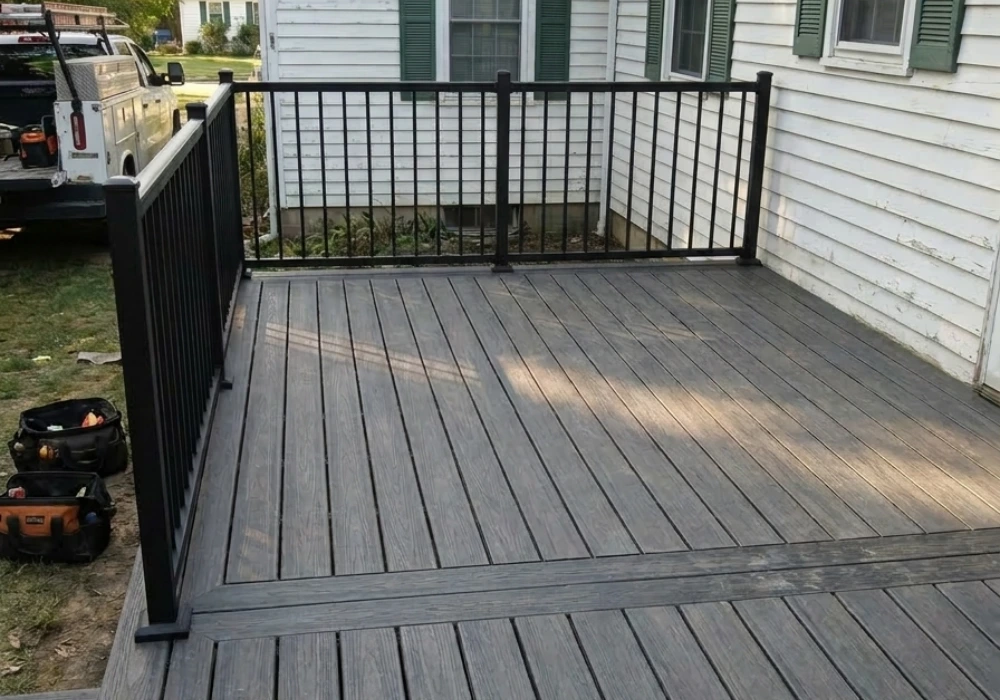
Building for the New England Climate
In Greater Boston, an exterior deck has to do more than look good in summer. Snow, freezing nights, spring rain and humid afternoons all put pressure on deck boards, fasteners and framing. That makes material choice a practical decision about safety, upkeep and how the deck will perform over time.
Homeowners in Massachusetts need outdoor spaces that stay dependable through sharp seasonal changes. Just like well-planned custom built-in cabinets make indoor space more useful, the right deck material makes exterior square footage easier to enjoy year after year.
The Reality of Wood Decks
Wood remains a familiar choice because it has a natural appearance and can cost less upfront. For many homes, pressure-treated lumber or cedar still creates a warm, traditional deck. The tradeoff is maintenance. In New England, wood needs regular attention to stay stable, smooth and safe.
Moisture is the main challenge. When snow melts into the grain and temperatures drop again, that water expands. Over repeated seasons, boards can cup, crack, splinter or loosen around fasteners. Without sanding, sealing and staining, a wood deck can age quickly.
Why Composite Performs Well in Boston Winters
Composite decking is made from a blend of wood fibers and recycled plastics, often protected by a capped outer shell. That structure helps the board resist water absorption, which is one of the biggest advantages in a wet and freezing climate.
Because composite boards do not react to moisture like natural wood, they are less likely to warp, crack or splinter after a hard winter. The upfront material cost is usually higher, but the ongoing care is much lighter. For busy homeowners, less seasonal work can be a major advantage.
Maintenance and Structural Lifespan
The best deck material is the one that matches your budget, lifestyle and expectations. Wood can be a strong option when homeowners are comfortable with maintenance. Composite is often the better fit when low upkeep, cleaner surfaces and longer-lasting appearance are priorities.
Whatever material you choose, installation quality matters. Proper framing, flashing, fasteners and railing connections have a direct impact on how the deck handles weather. A beautiful board surface cannot compensate for weak structure underneath.
Deck Construction by Green Dot Carpentry
Green Dot Carpentry builds durable decks for homeowners across Greater Boston and the North Shore. With 20 years of carpentry experience, our team understands how local weather affects outdoor materials and how to build for long-term use.
We focus on clean job sites, reliable scheduling and precise finish details. From framing to railings to final cleanup, the goal is simple: a deck that feels solid, looks sharp and adds useful outdoor space to your home.
Build a Durable Outdoor Space
Your deck should be ready for summer gatherings and the winters that follow. Whether wood or composite is the right fit, professional construction gives the project a stronger foundation from day one.
Call Green Dot Carpentry at 617 888 5362 to schedule a deck consultation in Greater Boston.