
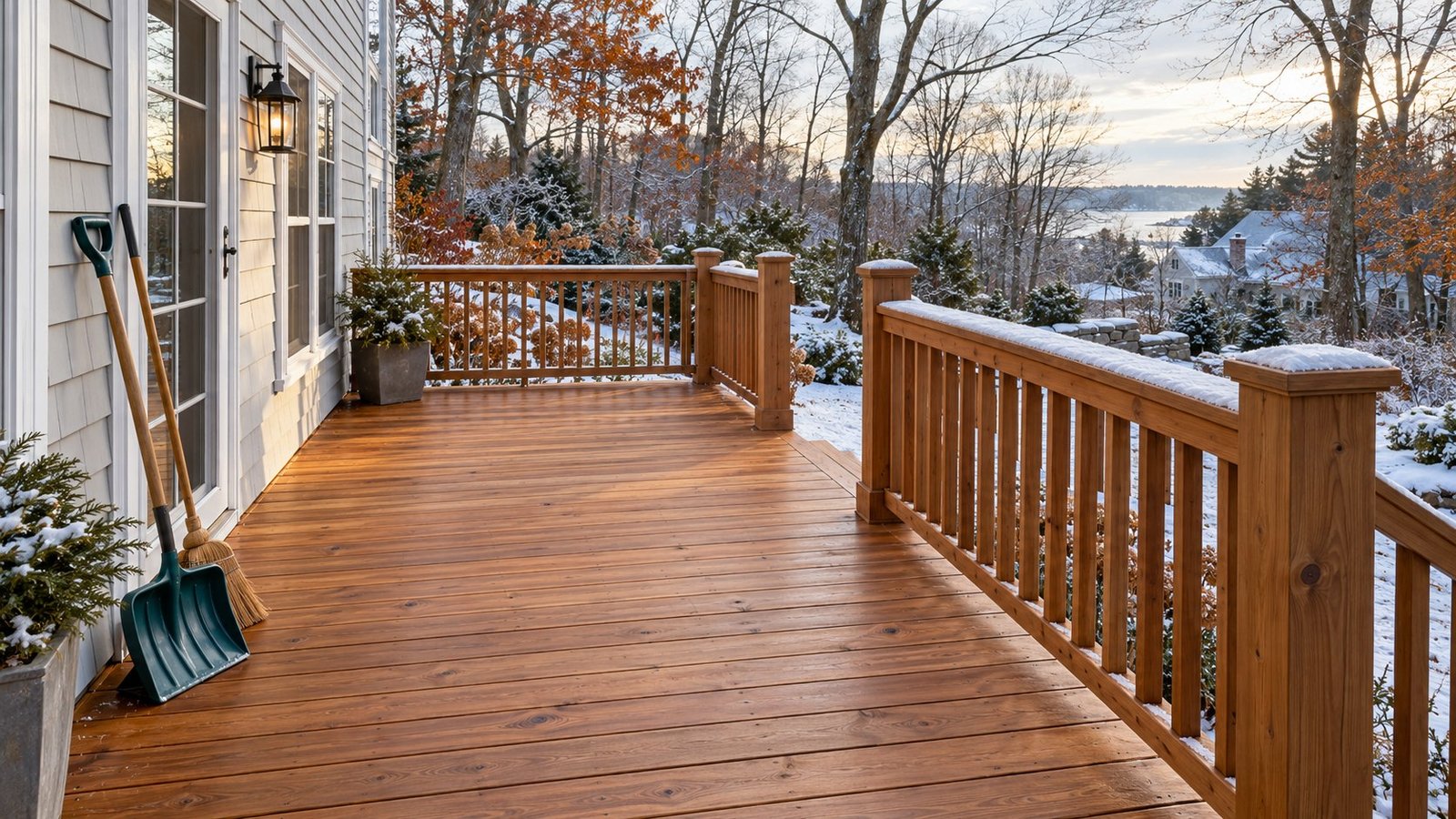
In Massachusetts and across New England, winter creates the harshest conditions a natural wood deck will face all year. Heavy snow accumulation, persistent sleet, and back-and-forth freeze-thaw cycles force moisture deep into the grain of pressure-treated pine, cedar, and mahogany. Repeated wetting and drying, together with winter weather, can worsen existing checks and leave moisture trapped in vulnerable joints.
Left unaddressed, minor surface wear turns into structural decay, board cupping, and weakened framing connections. Replacing an entire deck framework costs thousands of dollars, whereas practical pre-winter maintenance preserves your framing and surface boards. Protecting your wood deck before sub-zero temperatures arrive is a matter of moisture management, structural reinforcement, and stopping rot before it reaches the structural framing of your home.
How New England Winter Weather Accelerates Deck Rot
Winter deck deterioration across Massachusetts does not happen overnight. It is the direct result of standing moisture subjected to fluctuating temperatures. Throughout December and January, snow melts during warmer afternoons and seeps into wood pores, joint seams, and screw penetrations. When the temperature drops below 32 degrees Fahrenheit at night, that trapped water freezes and expands by roughly 9 percent.
Moisture cycling can widen checks and work connections loose over time. Decay fungi can damage wood that remains damp when temperatures permit growth; freezing alone does not cause rot. By the time spring arrives, areas beneath the surface boards often harbor soft, spongy rot that cannot be reversed with standard cleaning. While many property owners compare wood vs. composite decks in New England to evaluate long-term maintenance requirements, natural wood decks need regular inspection, good drainage and a maintained finish to weather northern winters.
Clearing Debris and Restoring Proper Drainage Gaps
The most frequent catalyst for deck rot during late autumn is organic debris trapped between floorboards. Falling leaves, pine needles, and airborne dirt settle into the drainage gaps between boards. Packed debris acts like a wet sponge, trapping moisture directly against the edges of the lumber for weeks at a time.
Before the first freeze in the Greater Boston area, thoroughly clear every drainage gap. Use a rigid putty knife or an edge tool to push compacted organic matter out from between boards. Avoid high-pressure power washing on aged wood, as excessive water pressure splinters softwood fibers and forces water deep into board end-cuts. Low-pressure water rinsing combined with physical gap clearing allows melting snow to drain immediately instead of pooling across the deck surface.
Applying the Right Moisture Barrier Before Freezing Temperatures
Bare natural wood absorbs ambient humidity and direct precipitation rapidly. To prevent rot during a wet New England winter, choose a deck-rated water-repellent finish and follow its instructions for wood moisture, air and surface temperatures, and rain-free curing time. Many products need mild weather, but application limits vary; daytime warmth alone does not ensure proper curing overnight.
Penetrating sealers and semi-transparent stains formulated for decking can help protect the wood while keeping its grain visible. Choose a product compatible with the wood species and any existing finish. Solid acrylic coatings frequently form a surface film that cracks under shifting winter temperatures. Once cracked, water enters through the fissures and gets trapped beneath the paint film, rotting the wood from within while the surface appears intact. A suitable penetrating finish reduces water uptake, including at exposed end grain, but it cannot repair decay or replace good drainage.
Snow and Ice Removal Mistakes That Ruin Wood Decking
Winter maintenance habits often cause more physical harm to wood decks than the weather itself. Metal snow shovels and sharp-edged plastic shovels gouge wood decking, stripping away sealants and cutting directly into the soft grain of cedar and pressure-treated pine. When clearing snow, use a plastic or rubber-edged shovel and push it strictly parallel to the deck boards to avoid catching board edges.
Chemical ice melters present another major risk. Avoid applying deicing salts unless the decking, finish and hardware manufacturers confirm compatibility. Chloride-containing runoff can contribute to corrosion of metal connectors and fasteners underneath the deck. If icy walkways require traction, a small amount of sand can improve traction. Sweep it away when conditions allow to limit abrasion of the finish.
Inspecting Deck Joists, Ledger Boards, and Fasteners
Surface boards provide the first line of defense, but catastrophic deck failures occur in the framing beneath the walking surface where ventilation is limited. New England snowstorms place immense loads on deck substructures. Snow weight varies widely with density and water content; depth alone cannot establish a safe load. Wet snow and ice can place substantial loads on aging joists and ledger connections.
Examine the ledger board where the deck attaches to your home's structural framing. Ensure the metal flashing is secure and prevents water runoff from draining behind your house siding. Check support posts, beams, and joist hangers for signs of rust, timber discoloration, or wood softness when probed with a flathead screwdriver. If joists flex excessively or railings wobble, consult an expert when hiring a finish carpenter in Massachusetts to reinforce the support framing before snow loads accumulate.
Professional Wood Deck Repair and Maintenance in Greater Boston
Green Dot Carpentry delivers dependable exterior carpentry, structural reinforcement, and custom wood deck construction across the Greater Boston area, including Revere, MA and surrounding communities. Led by Dinier de Oliveira, the team utilizes 20 years of carpentry experience to identify moisture traps, replace compromised timbers, and secure exterior structures before severe winter weather sets in.
From assessing damaged joists and rebuilding exterior stairs to complete deck framing, Green Dot Carpentry focuses on clean, precise workmanship. Every project is carried out with strict punctuality, uniformed crew members, and complete site cleanup, ensuring your outdoor living space remains safe, stable, and protected against New England winters.
Protect Your Deck Investment Before the First Freeze
Preventive wood care costs a fraction of an emergency framing rebuild. Addressing soft spots, resealing worn boards, and clearing drainage channels today helps reduce winter damage. A finish does not restore structural strength to decayed wood.
To inspect, reinforce, or repair your natural wood deck in Greater Boston, call (617) 888-5362 to schedule a service visit with Green Dot Carpentry today.
Further reading: USDA Forest Products Laboratory guidance on wood finishes and FEMA guidance on snow weight and loading.