
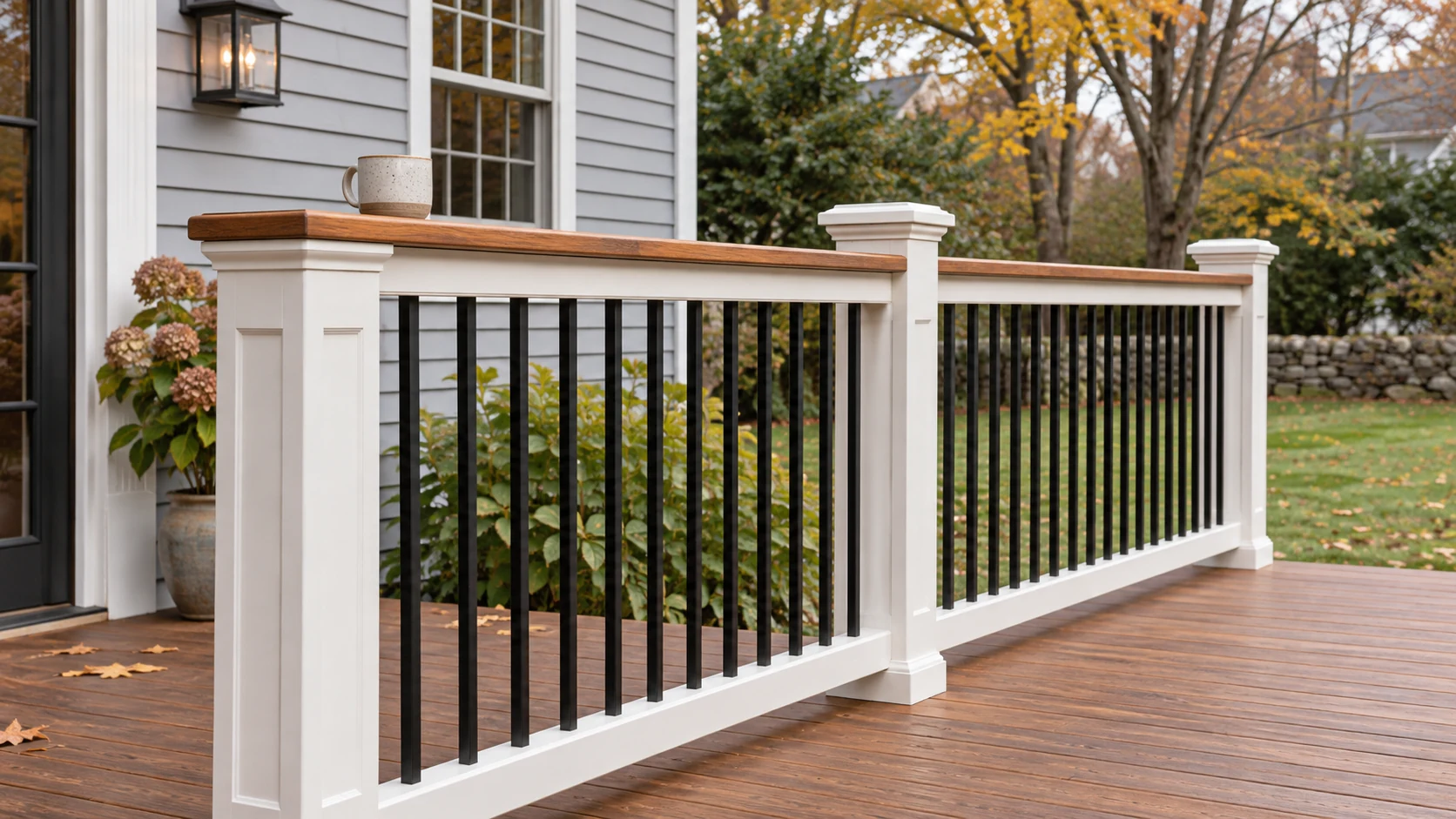
Why Deck Railings Protect Property Value
In the Greater Boston area, climate heavily dictates how long outdoor structures last. Snow, ice, and rapid temperature changes break down exterior materials. A failing deck railing is not just a visual issue. It is a direct safety hazard and an immediate red flag for home inspectors and potential buyers.
Updating a deck railing can improve the safety and appearance of your outdoor space when the posts, connections and supporting frame are sound. A railing makeover does not repair a damaged deck frame. Before choosing a new style, have the existing structure and attachment points assessed so any underlying deterioration can be addressed. A well-maintained deck can also make your property more appealing to buyers.
1. Composite Systems for Weather Resistance
Moisture is a common concern for wood railings in Massachusetts. Repeated wetting, drying and freezing conditions can contribute to cracking and deterioration, especially where water collects at joints.
Composite railing systems offer a low-maintenance alternative to painted wood. Many products do not require routine sanding, sealing or painting, but they still need cleaning and periodic checks of their connections. Follow the care instructions for the specific system; Trex's railing care guide, for example, explains why regular cleaning still matters. If you are already comparing wood and composite decking options, matching a composite railing to your deck boards provides a consistent look. Durability still depends on the chosen products, proper installation and ongoing care of the deck structure.
2. Aluminum Balusters for Reduced Maintenance
Standard wooden spindles often warp or split over time, leading to loose sections that compromise the safety of the entire railing.
Replacing old spindles with compatible aluminum balusters can give a sound railing a slimmer profile and reduce the upkeep associated with painted wood. Powder-coated aluminum does not develop iron rust, but its finish and connections still need inspection and cleaning, particularly near salt water. The strength of the complete railing depends on the rails, posts, fasteners and framing; new balusters alone cannot fix loose or deteriorated supports.
3. Cable Railing for Better Visibility
Thick wooden railings block natural light and obstruct the view of your yard. This can make an outdoor space feel enclosed and smaller than it actually is.
Installing a cable railing system opens up the sightlines around your property. Stainless steel cables create a clean, modern appearance, but safety depends on the complete system: post construction, cable spacing, tension and secure attachment. Have the installer confirm the design with the local building department and follow the manufacturer's requirements. Cable railings also need cleaning and tension checks; Feeney's CableRail product guide covers installation and maintenance considerations. Their open look can appeal to homeowners who want a clearer view of the yard.
4. Reinforced Wood Railings for Structural Safety
Sometimes, the best approach is upgrading existing natural materials with better construction methods. Older wood railings often fail because the joints were not properly sealed or the fasteners rusted.
Rebuilding with suitable pressure-treated lumber and properly specified, corrosion-resistant connectors can restore a wood railing when its supporting structure is sound. Connector and fastener compatibility with treated wood matters more than whether the hardware is hidden. Details that shed water, a suitable exterior finish and regular inspections help extend service life. Taking the right steps to protect natural wood decks during New England winters can help reduce premature deterioration and identify problems before they become more costly.
5. Flat Top Drink Rails for Added Utility
Most traditional deck railings have a narrow or rounded top, making them unusable for anything other than a handhold.
Adding a flat "drink rail", typically a compatible deck board secured across the top of the railing, provides a convenient surface for a cup or small plate without taking up floor space. Choose a railing system designed to support that cap and follow its fastening and drainage details. Keep any required graspable stair handrail separate from the wide cap, and avoid using the drink rail as a seat or step.
Deck Upgrades by Green Dot Carpentry
Green Dot Carpentry provides exact, structural carpentry services that protect your property value. With 20 years of experience in the Greater Boston area, our team understands exactly how local weather impacts outdoor structures.
Based in Revere and serving a 50-mile radius, we operate with a strict standard of professionalism. We arrive on time, our crew wears uniforms, and we execute clean work. When the job is finished, we do not leave a mess behind. You get straight answers, reliable scheduling, and a deck railing built to last.
Secure Your Deck Before the Next Season
Addressing a failing railing promptly can help catch connection or framing problems before they worsen. A well-planned upgrade improves everyday use and can reduce routine upkeep, depending on the material you choose. If a railing is loose or visibly deteriorated, keep people away from the affected area until it has been assessed and repaired.
Stop dealing with loose spindles and rotting wood. Call (617) 888-5362 to schedule your deck railing installation with Green Dot Carpentry.